Dizziness can affect stability, coordination, and the ability to perform everyday activities safely. Practical exercises may help strengthen the muscles involved in balance and reduce unsteadiness during movement. Here are practical exercises that may address dizziness and improve balance:
Gaze Stabilization Exercises
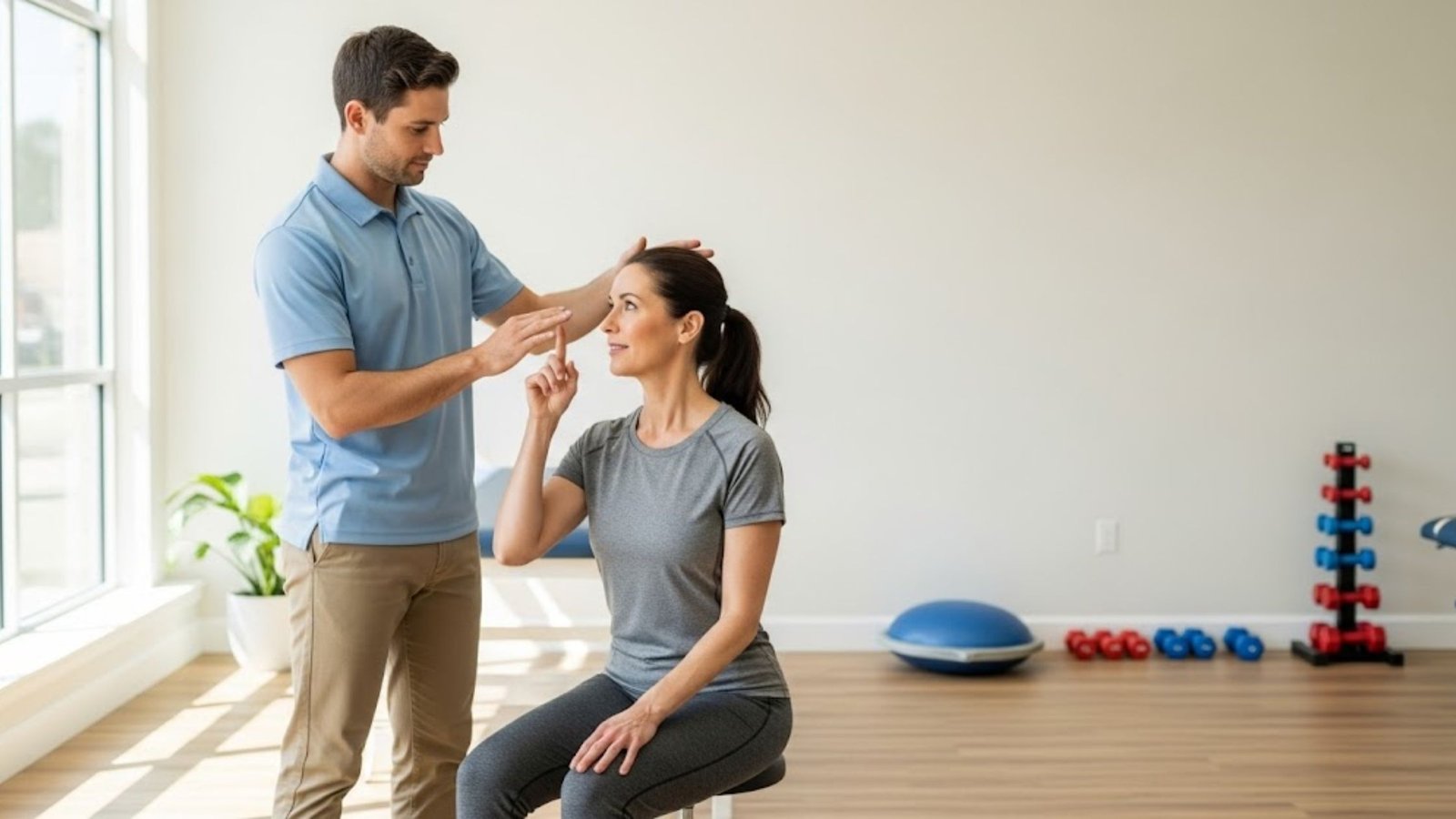
Gaze stabilization exercises help your eyes stay fixed on a target while your head moves. They target the reflex that keeps vision steady, which often weakens when dizziness sets in. Here are a few common versions you can try:
- Fixed target and moving head: Hold a small object at eye level, keep your gaze locked on it, and turn your head side to side while the object stays still.
- Vertical head movement: Fix your eyes on the same target, then nod your head up and down at a comfortable speed to challenge the reflex.
- Moving target and head: Hold the object and move both your head and the target in opposite directions to build a stronger connection between your eyes and your balance system.
- Distance shifts: Focus on a near object, then a far one, alternating between them to help your eyes adjust smoothly.
Habituation Movements
Habituation movements expose you to the specific positions that trigger dizziness; repeated practice teaches the brain to react less over time. Choose a motion that brings on mild symptoms, repeat it in a controlled way, and the response often fades with consistency. Keep these movements gentle, and stop if the dizziness becomes overwhelming; rest before you try again. A physical therapist can map out which motions suit your situation to keep the practice safe. A standard routine may include turning your head quickly to one side or bending forward to pick up an object.
Standing Balance
Standing balance is the base for nearly every movement you make, and weak balance increases the risk of falls. These exercises build stability through the legs, core, and feet, and they work best when you have a sturdy surface nearby for support. Here are some helpful starting points.
Static Stance Practice
Static stance practice trains your body to hold a fixed position without swaying. Stand with your feet together, place a hand near a counter, and hold the pose for a set count before you rest. As you improve, you can narrow your stance further or close your eyes; this added challenge sharpens your balance system.
Weight-Shifting Drills
Weight-shifting drills teach your body to move its center of gravity with control. Stand with your feet apart, shift your weight slowly to one side, then move it to the other while keeping your posture tall. This motion mimics the small adjustments you make when you stand in line or reach for an item. Practice near a wall, and increase the range only when the smaller shifts become steady.
Walking Coordination
Walking coordination combines vision, balance, and leg strength; dizziness often disrupts this smooth interaction. Practice on a flat, open surface, and clear the area of loose rugs or clutter that may cause a trip. Start with slow and deliberate steps, then add gentle head turns as your steadiness improves. You can walk in a straight line while you turn your head left and right, or you can march in place to build rhythm and control. Add these variations gradually to maintain a steady pace.
Schedule Your Evaluation for Dizziness
Improving balance and coordination is a fundamental part of maintaining physical stability in daily movement. Exercises such as gaze stabilization, habituation movements, and balance work can progressively enhance your steadiness and control. These exercises target the eyes, head, body, and stride, and together they help you rebuild the balance that dizziness can disrupt. Contact a qualified healthcare provider near you to schedule your dizziness evaluation today.