
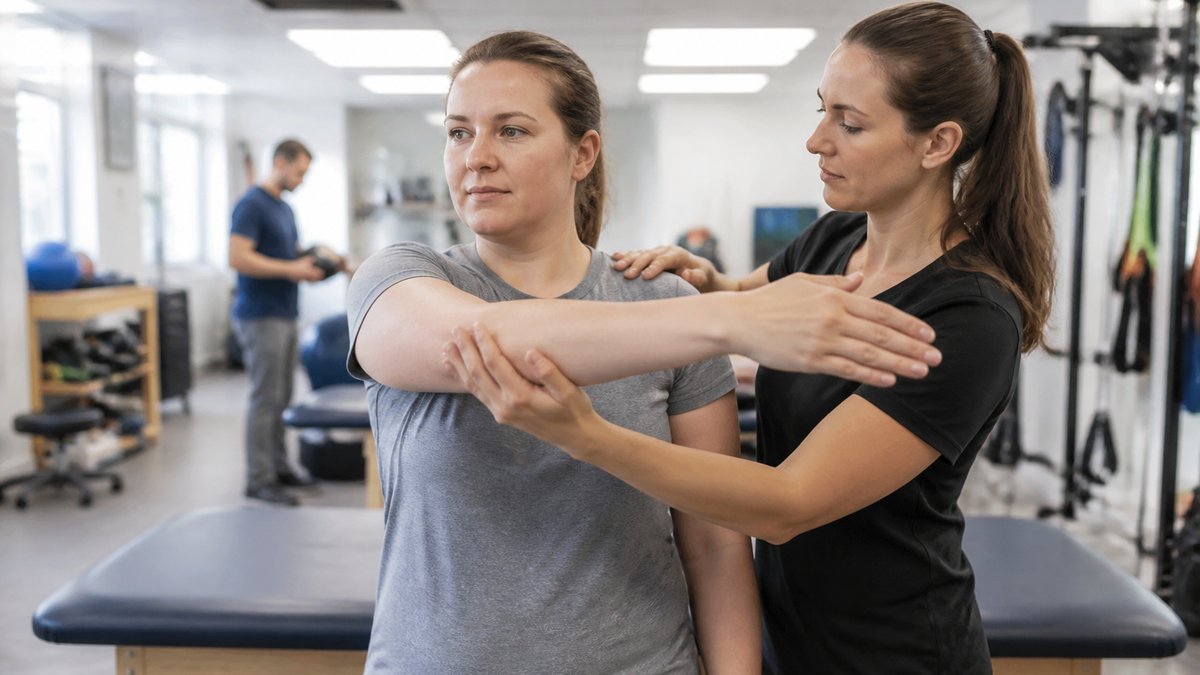
When an injury or illness limits how you move, your doctor may refer you to in-house physical therapy. Many sports and family medicine practices offer these services on-site. A licensed physical therapist works with your doctor, and both share notes on your progress. Here is more information on each step of the process:
Improving Strength and Coordination
Injuries can weaken the muscles around a joint, and weak muscles affect balance. Strength training rebuilds these muscles in stages. Your doctor increases resistance as your body adapts to each level. Progress varies from person to person. Typical exercises include the following:
- Resistance band pulls for the shoulders and hips
- Bodyweight squats and step-ups
- Leg stands for balance
- Ball tosses to train hand-eye coordination
Evaluating Patients
Physical therapy starts with a full evaluation. The provider reviews your medical history, and you describe your symptoms and daily limits. If you visited urgent care for a sprain or strain, bring any X-rays or visit notes. Wear loose, comfortable clothing to your first session.
The doctor watches you walk, sit, and stand, and they note any changes in posture or balance. They may measure joint movement with a goniometer, which is a tool shaped like a protractor. They also test muscle strength on both sides of your body.
After the exam ends, the doctor writes a treatment plan with specific goals. The plan lists the number of weekly visits and the types of exercises. Your doctor reviews the plan, and you get a copy to keep at home.
Increasing Range of Motion
When a joint stays still for days or weeks, the tissue around it tightens. Stiffness limits daily tasks, and it may disrupt your sleep. Range-of-motion work targets this stiffness directly. Even a few days in a sling or brace leads to some loss of motion.
Your doctor moves the joint gently, and you perform stretches during each session. Some clinics also use heat or ultrasound before stretching. The therapist tracks your measurements so your doctor sees changes over time. You also receive a short home stretching routine.
Planning Return to Activities
The final phase prepares you for work, sports, or other regular tasks. Your therapist asks about your job and hobbies, and they design matching drills. Before you return to full activity, your doctor and therapist review these points:
- Pain levels during and after movement
- Strength compared to the uninjured side
- Balance and control during task-specific drills
- Your comfort with the planned activity
Some patients return to activity in stages as they go along. If you have a physical job, your therapist may suggest modified duties at first. Your doctor signs off on each change. You keep doing home exercises, and you report any new pain right away.
Schedule a Doctor Appointment
If pain or stiffness limits your movement, talk with your doctor about a physical therapy referral. Many clinics offer extended hours, and some accept walk-in visits for new injuries. Bring your insurance card and a list of current medications. Ask the front desk about costs before your first session so you know what to expect.
