Because elevated blood sugar affects circulation and nerve function, diabetes can slow the body’s natural healing process over time, especially in the feet and lower legs. Reduced blood flow limits the oxygen and nutrients that reach damaged tissue. Nerve damage, known as peripheral neuropathy, may reduce sensation in the feet, so a person is more likely to not notice a cut or pressure sore right away. Regular diabetic wound care is beneficial for people with neuropathy, poor circulation, foot deformities, or a history of foot ulcers. Here’s more information on effective diabetic wound care and how it preserves your health:
Your Preventive Care
Preventive diabetic wound care focuses on reducing pressure, friction, and injury to the feet. Two daily habits support this goal. Improper nail trimming can lead to ingrown toenails, cuts, and infections. For people with diabetes, these minor injuries may take longer to heal. If you are managing a diabetic condition, follow these guidelines when trimming your toenails:
- Trim nails straight across, not in a curved shape.
- File sharp edges with an emery board.
- Avoid cutting into the corners of the nail.
- Trim nails after bathing, when they are softer.
- Check the skin around each nail for redness or swelling.
If you have thick, brittle, or fungal nails, or limited vision or reduced flexibility, a foot and ankle specialist can trim and assess them for you.
Diabetic shoes are another preventive care option that aims to reduce pressure points and protect sensitive skin. They typically feature extra depth, a wide toe box, seamless interiors, and firm heel counters. These features help limit rubbing and allow room for swelling or foot deformities such as bunions and hammertoes. For further customization, diabetic inserts work alongside specialized shoes to distribute body weight more evenly across the foot’s sole. These custom-molded inserts lower pressure on high-risk areas, such as the ball of the foot and the heel.
Your Routine Check-ins
By regularly visiting a foot and ankle specialist, you add an extra layer of protection to your foot and wound-care routine. During a routine exam, your specialist checks your feet for calluses, blisters, cracks, color changes, and pressure points. They may also test sensation and circulation to monitor changes over time. The frequency of check-ins depends on your individual risk level.
Some patients schedule visits once a year; others with neuropathy or a history of ulcers may need appointments every few months. These visits give your specialist a baseline for comparison. They also offer a chance to ask questions about footwear, skin care, and self-exams. Between visits, inspect your feet daily with a mirror or the help of a family member.
Your Wound Management
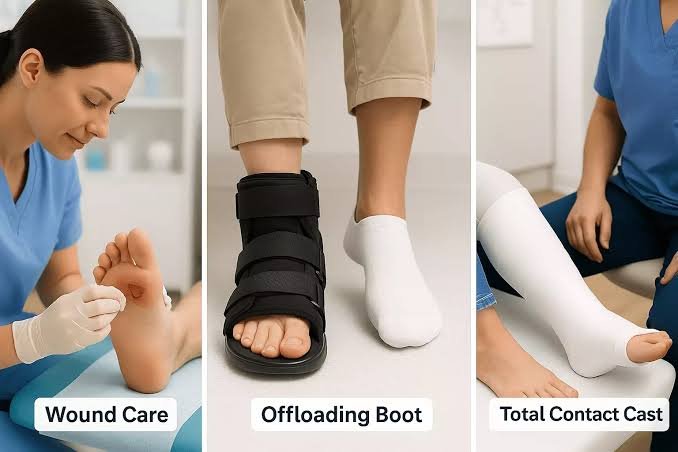
When a wound develops, prompt, consistent care matters. Diabetic wound care for active wounds is based on the wound’s size, depth, and location. Common components of wound management include:
- Debridement: Removing dead or damaged tissue to keep the wound bed clean.
- Offloading: Using special boots, casts, or padding to reduce pressure on the wound.
- Dressings: Using specialized dressings to keep the wound clean and maintain an appropriate moisture balance.
- Infection Monitoring: Regular checks for signs of infection, such as increased redness, warmth, drainage, or odor.
- Circulation Assessment: Testing blood flow to determine whether additional vascular care is needed.
Your specialist may also coordinate with your primary care provider or endocrinologist, since blood sugar management plays a role in the overall care plan. Follow-up appointments allow your specialist to measure the wound and adjust treatment as needed.
Get Specialized Diabetic Wound Care
Effective wound care combines prevention efforts, routine professional exams, and structured management of active wounds. Each component addresses a different stage of foot health. A foot and ankle specialist with wound care expertise can assess your risk and recommend appropriate management strategies. Schedule an evaluation with a wound care specialist, and bring a list of your current medications and foot concerns to your first visit. This will help keep your appointment focused on your wound management needs.